

Đề thi Tiếng Anh lớp 5 cuối năm (đề số 4)
Cuối năm Tiếng Anh 5 (bản 2024), Unit 11–20: nghe đánh số nhân vật truyện, chọn đáp án (Tết, trang phục mùa đông, nơi muốn thăm, phương tiện), từ khác trọng âm; đọc chọn tranh, điền hộp từ «Four seasons», nối câu hỏi – câu trả lời; nhìn tranh trả lời, điền chữ, sắp xếp câu, viết đoạn về vấn đề sức khỏe và lời khuyên; Nói về gia đình, mùa, sức khỏe, truyện, kì nghỉ, phương tiện, nơi tham quan, Tết.
Mỗi lượt thi là một mã đề mới 34 câu cùng ma trận với đề này · Mỗi ngày 1 lượt miễn phí · Mở gói để luyện không giới hạn
Danh sách câu hỏi
Listen and number the pictures. Nối mỗi số với đúng tranh.
 (a)B
 (b)C
 (c)D
 (d)
Xem đáp án và lời giải
Đáp án: Number one → (c) · Number two → (d) · Number three → (a) · Number four → (b)Chấm từng ý: mỗi ý đúng được một phần điểm của câu.
Cô: Number one.
A: Who's your favourite character?
B: The tortoise. He's slow but he wins.
Cô: Number two.
A: I like the fox. He's clever.
Cô: Number three.
B: The ant works hard.
Cô: Number four.
A: The grasshopper sings beautifully.
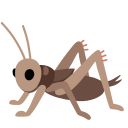
Number 1: the tortoise → 🐢. Number 2: the fox → 🦊. Number 3: the ant → 🐜. Number 4: the grasshopper → 🦗.
Listen and tick the correct picture.
 B
 C

Xem đáp án và lời giải
Đáp án: 🧧A: What do children get at Tet?
B: They get lucky money.
"They get lucky money." — trẻ em được lì xì → 🧧. 🎁 là present, 🎈 là balloon.
Listen and choose the correct answer. What does Ben usually wear in winter?
Xem đáp án và lời giải
Đáp án: a jacket and bootsA: What do you usually wear in winter, Ben?
B: I usually wear a jacket and boots.
Ben: "I usually wear a jacket and boots." → áo khoác và ủng.
Listen and choose the correct answer. Where does the girl want to visit?
Xem đáp án và lời giải
Đáp án: Hoan Kiem LakeA: Where do you want to visit next summer?
B: I want to visit Hoan Kiem Lake. I think it's very beautiful.
"I want to visit Hoan Kiem Lake." → Hồ Hoàn Kiếm.
Listen and choose the correct answer. How does the boy usually go to Hoi An?
Xem đáp án và lời giải
Đáp án: taxiA: Can I go to Hoi An by bus?
B: Yes, you can. But I usually go by taxi.
"But I usually go by taxi." — bạn thường đi taxi; bus chỉ là câu hỏi của người kia.
Listen and choose the word with a DIFFERENT stress. (Nghe và chọn từ có trọng âm khác các từ còn lại.)
Xem đáp án và lời giải
Đáp án: hotelCô: holiday.
Cô: family.
Cô: visit.
Cô: hotel.
'holiday, 'family, 'visit nhấn âm tiết thứ nhất; ho'tel nhấn âm tiết thứ hai → chọn hotel.
Listen and choose the word with a DIFFERENT stress. (Nghe và chọn từ có trọng âm khác các từ còn lại.)
Xem đáp án và lời giải
Đáp án: bananaCô: medicine.
Cô: vegetable.
Cô: exercise.
Cô: banana.
'medicine, 'vegetable, 'exercise nhấn âm tiết thứ nhất; ba'nana nhấn âm tiết thứ hai → chọn banana.
Read and choose the correct picture: «My mother goes to work by motorbike.»
 🚲B
 🛵C
 🚗
Xem đáp án và lời giải
Đáp án: 🛵motorbike = xe máy → 🛵. 🚲 là bike, 🚗 là car.
Read and choose the correct picture: «We give flowers to our teachers on Teachers' Day.»
 💐B
 🎂C🎈
Xem đáp án và lời giải
Đáp án: 💐flowers = hoa → 💐.
Read and choose the word for blank (1).
Xem đáp án và lời giải
Đáp án: seasons"There are four seasons here." — bốn mùa (seasons, số nhiều sau four).
Read and choose the word for blank (2).
Xem đáp án và lời giải
Đáp án: T-shirt"I usually wear shorts and a T-shirt" — mùa hè mặc quần soóc và áo phông (T-shirt).
Read and choose the word for blank (3).
Xem đáp án và lời giải
Đáp án: autumn"because it's cool and windy" — mát và có gió: mùa thu (autumn). Mùa xuân (spring) ấm và có mưa phùn.
Read and choose the word for blank (4).
Xem đáp án và lời giải
Đáp án: cold"so I wear a jacket and a scarf" — mặc áo khoác, khăn vì trời lạnh (cold).
Read and match. Nối mỗi câu hỏi với câu trả lời đúng.
Xem đáp án và lời giải
Đáp án: What did you do there? → We swam and took photos. · What are you going to do this summer? → I'm going to visit Sa Pa. · How was the trip? → It was great. · How did you get there? → We went there by train.Chấm từng ý: mỗi ý đúng được một phần điểm của câu.
1–D: What did you do there? → We swam and took photos. 2–B: going to (dự định) → I'm going to visit Sa Pa. 3–A: How was the trip? → It was great. 4–C: How did you get there? → We went there by train.
Look at the picture and answer the question: What did you have at the party? – We had a big ______.
Xem đáp án và lời giải
Đáp án: cakeTranh bánh sinh nhật → We had a big cake.
Look at the picture and answer the question: What does Nam drink every morning to stay healthy? – He drinks ______.

Xem đáp án và lời giải
Đáp án: milkTranh cốc sữa → He drinks milk.
Look at the picture and write the word: f _ v _ r

Xem đáp án và lời giải
Đáp án: feverTrả lời mẫu: Điền e và e, viết nguyên từ «fever» (f-e-v-e-r): 0,25 điểm.
Tranh bạn bị sốt, ngậm nhiệt kế → fever. Hai chữ còn thiếu là e, e.
Look at the picture and write the word: p _ c n _ c

Xem đáp án và lời giải
Đáp án: picnicTrả lời mẫu: Điền i và i, viết nguyên từ «picnic» (p-i-c-n-i-c): 0,25 điểm.
Tranh giỏ đồ đi dã ngoại → picnic. Hai chữ còn thiếu là i, i.
Put the words in order to make a sentence. (Sắp xếp các từ thành câu đúng.)
Xem đáp án và lời giải
Đáp án: I → go → to → school → by → bike.Đề giấy: Reorder the words and write the sentence: go / school / bike. / I / by / to
Trả lời mẫu: I go to school by bike. — đúng thứ tự, đủ từ, viết hoa chữ đầu, có dấu câu cuối: 0,25 điểm.
I go to school by bike. (Tôi đi học bằng xe đạp.)
Put the words in order to make a sentence. (Sắp xếp các từ thành câu đúng.)
Xem đáp án và lời giải
Đáp án: Will → you → buy → new → clothes → for → Tet?Đề giấy: Reorder the words and write the sentence: buy / clothes / Tet? / Will / you / new / for
Trả lời mẫu: Will you buy new clothes for Tet? — đúng thứ tự, đủ từ, viết hoa chữ đầu, có dấu câu cuối: 0,25 điểm.
Will you buy new clothes for Tet? (Bạn sẽ mua quần áo mới đón Tết chứ?)
Put the words in order to make a sentence. (Sắp xếp các từ thành câu đúng.)
Xem đáp án và lời giải
Đáp án: How → often → do → you → drink → milk?Đề giấy: Reorder the words and write the sentence: often / milk? / you / How / drink / do
Trả lời mẫu: How often do you drink milk? — đúng thứ tự, đủ từ, viết hoa chữ đầu, có dấu câu cuối: 0,25 điểm.
How often do you drink milk? (Bạn uống sữa bao lâu một lần?)
Put the words in order to make a sentence. (Sắp xếp các từ thành câu đúng.)
Xem đáp án và lời giải
Đáp án: What → do → you → think → of → Hoi An?Đề giấy: Reorder the words and write the sentence: think / Hoi An? / do / What / of / you
Trả lời mẫu: What do you think of Hoi An? — đúng thứ tự, đủ từ, viết hoa chữ đầu, có dấu câu cuối: 0,25 điểm.
What do you think of Hoi An? (Bạn nghĩ gì về Hội An?)
Writing: Choose the best sentence to START a short paragraph about Lan's health problem. (Gợi ý: Lan – a headache – watches TV too late)
Xem đáp án và lời giải
Đáp án: Lan has a headache because she watches TV too late.Đề giấy: Viết đoạn văn khoảng 30–40 từ về vấn đề sức khỏe của Lan và lời khuyên. Gợi ý: What's Lan's problem? (a headache) Why? (watches TV too late, doesn't sleep well) What should she do? What shouldn't she do? — Câu này chấm phần MỞ ĐOẠN (vấn đề + lí do).
Trả lời mẫu: Đoạn mẫu: «Lan has a headache because she watches TV too late. She doesn't sleep well. She should take a rest. She should go to bed early. She shouldn't watch TV at night.» (khoảng 33 từ). Phần mở đoạn 0,25 điểm: 1–2 câu nêu đúng vấn đề (has a headache) và lí do, động từ chia đúng với she (has, watches).
Lan (she) → has, watches: "Lan has a headache because she watches TV too late."
Writing: Choose the best ADVICE sentence for Lan's paragraph.
Xem đáp án và lời giải
Đáp án: She should go to bed early.Đề giấy: (Viết tiếp đoạn văn ở câu trên) 2–3 câu lời khuyên cho Lan, dùng should / shouldn't. Cả đoạn khoảng 30–40 từ.
Trả lời mẫu: Câu mẫu: «She should take a rest. She should go to bed early. She shouldn't watch TV at night.» Phần lời khuyên 0,25 điểm: ít nhất 2 câu đúng mẫu should / shouldn't + động từ nguyên thể, hợp với vấn đề đau đầu; cả đoạn khoảng 30–40 từ.
should + động từ nguyên thể (go, không phải goes). «She shouldn't go to bed early» là lời khuyên sai.
Listen to the teacher and choose the best answer.
Xem đáp án và lời giải
Đáp án: We often watch films together.Đề giấy: Nói (thầy cô hỏi trực tiếp): «What do you often do with your family?» — con trả lời to, rõ, đủ câu.
Trả lời mẫu: «We often watch films together.» — nói to, rõ, đủ câu: 0,25 điểm. Câu hỏi về con: con thay bằng thông tin của mình, đúng mẫu câu là đủ điểm.
Cô: What do you often do with your family?
Hỏi thói quen (often) → hiện tại đơn: "We often watch films together." (con kể việc thật của gia đình).
Listen to the teacher and choose the best answer.
Xem đáp án và lời giải
Đáp án: It's warm.Đề giấy: Nói (thầy cô hỏi trực tiếp): «What's the weather like in spring?» — con trả lời to, rõ, đủ câu.
Trả lời mẫu: «It's warm.» — nói to, rõ, đủ câu: 0,25 điểm. Câu hỏi về con: con thay bằng thông tin của mình, đúng mẫu câu là đủ điểm.
Cô: What's the weather like in spring?
Hỏi thời tiết mùa xuân → "It's warm." (cần It's).
Listen to the teacher and choose the best answer.
Xem đáp án và lời giải
Đáp án: I do morning exercise.Đề giấy: Nói (thầy cô hỏi trực tiếp): «How do you stay healthy?» — con trả lời to, rõ, đủ câu.
Trả lời mẫu: «I do morning exercise.» — nói to, rõ, đủ câu: 0,25 điểm. Câu hỏi về con: con thay bằng thông tin của mình, đúng mẫu câu là đủ điểm.
Cô: How do you stay healthy?
Hỏi thói quen → hiện tại đơn: "I do morning exercise."
Listen to the teacher and choose the best answer.
Xem đáp án và lời giải
Đáp án: It's the tortoise.Đề giấy: Nói (thầy cô hỏi trực tiếp): «Who's your favourite character in the story?» — con trả lời to, rõ, đủ câu.
Trả lời mẫu: «It's the tortoise.» — nói to, rõ, đủ câu: 0,25 điểm. Câu hỏi về con: con thay bằng thông tin của mình, đúng mẫu câu là đủ điểm.
Cô: Who's your favourite character in the story?
Hỏi nhân vật em thích → "It's the tortoise." (một nhân vật → It's).
Listen to the teacher and choose the best answer.
Xem đáp án và lời giải
Đáp án: It was fantastic.Đề giấy: Nói (thầy cô hỏi trực tiếp): «How was your summer holiday?» — con trả lời to, rõ, đủ câu.
Trả lời mẫu: «It was fantastic.» — nói to, rõ, đủ câu: 0,25 điểm. Câu hỏi về con: con thay bằng thông tin của mình, đúng mẫu câu là đủ điểm.
Cô: How was your summer holiday?
Hỏi bằng was (quá khứ) → "It was fantastic."
Listen to the teacher and choose the best answer.
Xem đáp án và lời giải
Đáp án: You can go by bus or by bike.Đề giấy: Nói (thầy cô hỏi trực tiếp): «How can I get to your school?» — con trả lời to, rõ, đủ câu.
Trả lời mẫu: «You can go by bus or by bike.» — nói to, rõ, đủ câu: 0,25 điểm. Câu hỏi về con: con thay bằng thông tin của mình, đúng mẫu câu là đủ điểm.
Cô: How can I get to your school?
How can I get to…? → chỉ phương tiện cho người hỏi: "You can go by bus or by bike."
Look at the picture. Listen to the teacher and choose the best answer.

Xem đáp án và lời giải
Đáp án: I think it's beautiful.Đề giấy: Nói (thầy cô hỏi trực tiếp, chỉ vào tranh cảnh thiên nhiên): «What do you think of this place?» — con trả lời to, rõ, đủ câu.
Trả lời mẫu: «I think it's beautiful.» — nói to, rõ, đủ câu: 0,25 điểm.
Cô: What do you think of this place?
Hỏi cảm nghĩ → "I think it's beautiful."
Look at the picture. Listen to the teacher and choose the best answer.

Xem đáp án và lời giải
Đáp án: They watch fireworks.Đề giấy: Nói (thầy cô hỏi trực tiếp, chỉ vào tranh): «What do people do at Tet?» — con trả lời to, rõ, đủ câu.
Trả lời mẫu: «They watch fireworks.» — nói to, rõ, đủ câu: 0,25 điểm.
Cô: What do people do at Tet?
Tranh pháo hoa; việc thường làm dịp Tết → hiện tại đơn: "They watch fireworks."
Look at the picture. Listen to the teacher and choose the best answer.

Xem đáp án và lời giải
Đáp án: He should take some medicine.Đề giấy: Nói (thầy cô hỏi trực tiếp, chỉ vào tranh): «What should he take?» — con trả lời to, rõ, đủ câu.
Trả lời mẫu: «He should take some medicine.» — nói to, rõ, đủ câu: 0,25 điểm.
Cô: What should he take?
Tranh viên thuốc → "He should take some medicine."
Look at the picture. Listen to the teacher and choose the best answer.
Xem đáp án và lời giải
Đáp án: She goes to school by bike.Đề giấy: Nói (thầy cô hỏi trực tiếp, chỉ vào tranh): «How does she go to school?» — con trả lời to, rõ, đủ câu.
Trả lời mẫu: «She goes to school by bike.» — nói to, rõ, đủ câu: 0,25 điểm.
Cô: How does she go to school?
Tranh xe đạp; she → goes; đi bằng xe đạp là by bike.
Mỗi lượt thi 34 câu · 40 phút · Chấm điểm tự động, có lời giải